Taking care of a swimming pool is a big job, but it does not have to be scary. One of the most important tasks is learning how to raise alkalinity in pool water. Many new pool owners focus only on chlorine, but alkalinity is actually the secret shield that protects your water chemistry. When your total alkalinity is too low, your pool’s pH levels will bounce up and down like a rubber ball. This makes the water itchy for your skin and cloudy to look at. By keeping this number in the right range, you ensure your water stays sparkling, clean, and safe for everyone to enjoy all summer long.
Why Your Pool Needs Balanced Alkalinity
Think of alkalinity as the “buffer” for your pool. Its main job is to keep your pH levels steady. If you ignore it, the pH can drop quickly, making the water acidic. Acidic water can eat away at your pool’s metal parts, ladders, and even the liner. When I first started managing my own pool, I struggled with cloudy water constantly. Once I learned how to raise alkalinity in pool systems, my water problems mostly disappeared. Proper alkalinity acts like a shock absorber, keeping your water chemistry stable and protecting your expensive pool equipment from lasting damage.
The Perfect Range for Your Pool
So, what is the magic number you are looking for? Most experts suggest keeping your total alkalinity between 80 and 120 parts per million (ppm). If your test kit shows a number below 80, it is time to take action. Testing your water once a week is a great habit to start. It helps you catch problems before they turn into green, swampy messes. Remember that knowing how to raise alkalinity in pool water is much easier than fixing a major chemical imbalance later. Keep your testing kit handy and check your levels after heavy rain or lots of swimmers.
What Causes Low Alkalinity?
It is frustrating when your pool chemicals seem to disappear overnight. Rainwater is a common culprit because it is naturally acidic. When it pours into your pool, it dilutes the chemicals and pulls your alkalinity down. Additionally, heavy swimming and sweat can change the chemistry over time. If you use certain types of chlorine tablets, they might also lower your alkalinity as they dissolve. Recognizing these causes helps you stay ahead of the game. When you understand the “why” behind the numbers, learning how to raise alkalinity in pool maintenance becomes a simple part of your routine.
The Best Tool for the Job: Sodium Bicarbonate
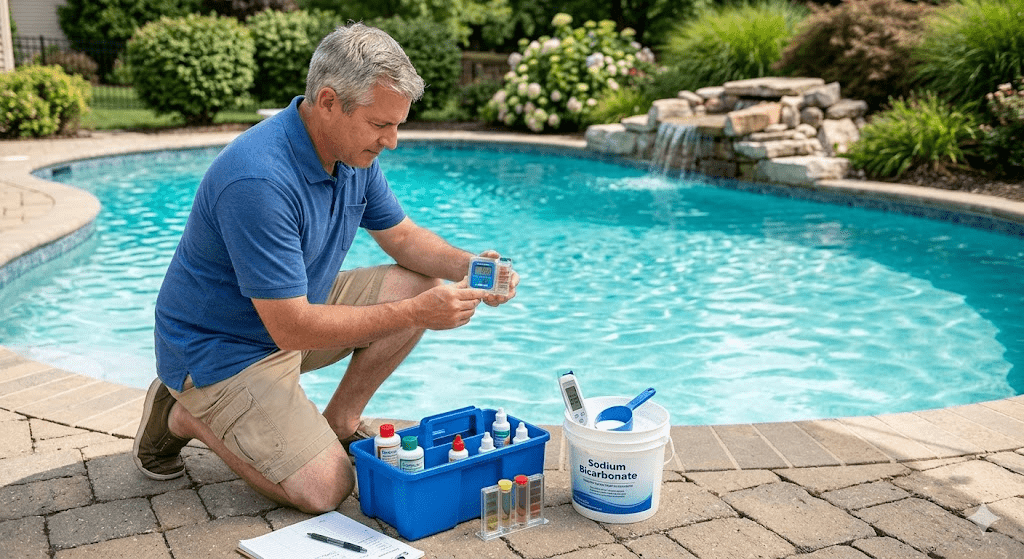
You might hear people talk about “alkalinity increaser.” In reality, this is usually just sodium bicarbonate, which is basically baking soda! It is a safe, easy-to-use powder that does the trick perfectly. I prefer using this because it is gentle on the water and effective at raising levels without spiking the pH too much. You can buy it at any pool supply store. Always check the label for instructions based on your pool’s size. Using the right amount of sodium bicarbonate is the most reliable way for you to learn how to raise alkalinity in pool environments successfully.
Test Your Water First
Never add chemicals to your pool without testing it first. Use a reliable test strip or a liquid kit to see exactly where your levels stand. If you do not know the starting point, you might add too much product, which creates a whole new set of problems. Once you confirm the reading is low, write it down. Having accurate data is the hallmark of a smart pool owner. Once you have your baseline number, you can calculate exactly how much product is needed to safely learn how to raise alkalinity in pool water correctly and quickly.
Calculate Your Pool Volume
Before you pour anything into the water, you must know how many gallons your pool holds. Most pool chemicals come with a chart that tells you how much to add per 10,000 gallons of water. If you are not sure about your pool’s size, you can usually find this in your owner’s manual or by using a simple online calculator. Guessing the volume can lead to unbalanced water. To master how to raise alkalinity in pool maintenance, accuracy is your best friend. Take a moment to verify your size so you get the dosage perfect every single time.
Add the Chemical Safely
When you are ready to add the sodium bicarbonate, turn your pool pump on. This helps circulate the water so the chemical mixes evenly. Do not just dump it all in one spot, as it could settle on the floor and cause stains. Instead, slowly sprinkle the powder across the surface of the deep end. This allows it to dissolve properly as it moves through the filtration system. Watching the water swirl as you add the powder is a satisfying part of the process. This method of distribution is vital when learning how to raise alkalinity in pool settings.
Wait and Re-test
After you have added the chemical, let your pump run for at least four to six hours. You want to make sure the water is fully mixed before you test it again. It is tempting to jump in, but patience pays off here! If the level is still a bit low, wait until the next day to add more. It is always better to add a little at a time than to overdo it. Following this waiting period is a key professional tip for those learning how to raise alkalinity in pool water. It ensures safety and accuracy for your family.
Check Your pH Level
Once your alkalinity is in the safe 80–120 ppm zone, test your pH again. Alkalinity and pH are closely linked. Sometimes, when you learn how to raise alkalinity in pool water, your pH will rise slightly too. This is usually fine, but you want to make sure it stays between 7.2 and 7.8. If the pH gets too high, the water might become cloudy again. Staying on top of both numbers keeps your pool water feeling soft, looking crystal clear, and smelling fresh throughout the entire swimming season. Regular balance is the secret to a great pool.
Summary Table: Balancing Your Water
| Feature | Details |
| Ideal Alkalinity Range | 80 to 120 ppm |
| Best Product to Use | Sodium Bicarbonate (Baking Soda) |
| Testing Frequency | Once per week |
| Main Benefit | Prevents pH “bounce” and protects equipment |
| Common Causes of Low Levels | Rain, heavy usage, and acidic chemicals |
| Key Tip | Always circulate water while adding chemicals |
Frequently Asked Questions
1. How often should I check my pool’s alkalinity?
You should test your alkalinity at least once a week. If there is a big storm or a lot of people swimming, check it sooner to keep everything balanced.
2. Can I use regular kitchen baking soda?
Yes, you can use store-bought baking soda! It is chemically the same as the “alkalinity increaser” sold at pool shops, just usually much cheaper for the same results.
3. What happens if I don’t raise the alkalinity?
If you skip this, your pH will become unstable. This can lead to eye irritation, skin dryness, and corrosion of your pool’s metal parts or plaster.
4. Will raising alkalinity make my water cloudy?
If you add too much at once, it might make the water look cloudy for a few hours. This is why you should always add it slowly while the pump runs.
5. How long after adding chemicals can I swim?
It is best to wait at least four hours, or until the water has circulated completely through the filter, to ensure the chemicals are fully dissolved and safe.
6. Should I adjust pH or alkalinity first?
Always aim to fix your total alkalinity first. Because it acts as a buffer, balancing it will often help stabilize your pH level naturally.
Conclusion
Keeping your pool in tip-top shape is all about consistency and knowing the basics of water chemistry. By learning how to raise alkalinity in pool water, you have taken a huge step toward becoming a pro at pool maintenance. Your water will be safer for your kids, better for your pool equipment, and much more inviting to dive into on a hot day. Do you have a favorite trick for keeping your water clear? Share your thoughts below or reach out if you have more questions about your pool’s health. Let’s keep those pools sparkling all season long!
Leave a Reply