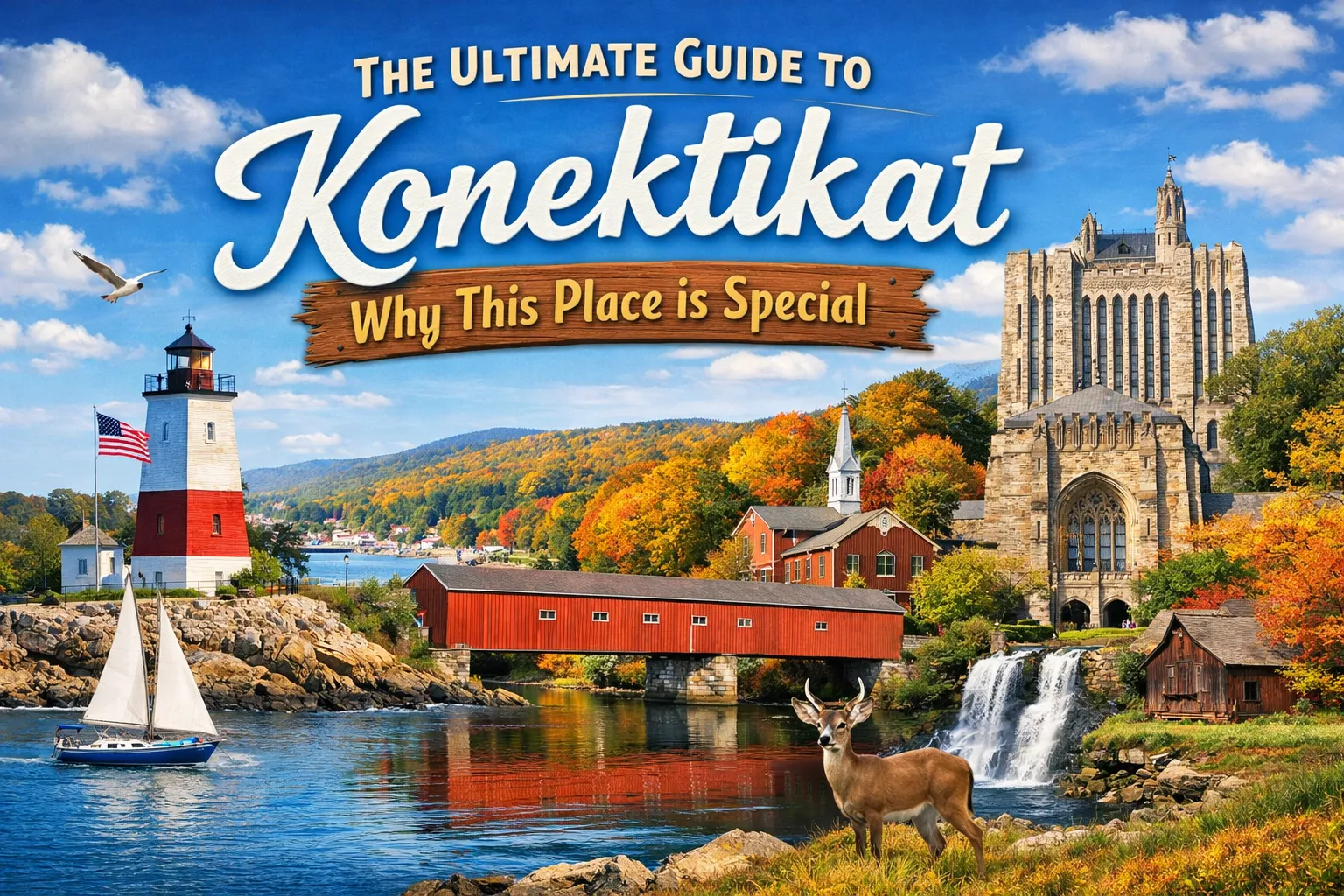
Introduction: Beyond the Postcard
In the hyper-digital age of 2026, travel has shifted. We no longer just seek “sights”; we seek “textures.” The “Konektikat“ shoreline—a 618-mile jigsaw puzzle of salt marshes, granite fingers, and tidal estuaries—has become the premier destination for this new philosophy of “Slow Travel.” While neighboring states offer the high-gloss, high-expense glamor of the Hamptons or the commercialized dunes of the Cape, the Connecticut coast offers something increasingly rare: a working maritime heritage that hasn’t been polished into a souvenir.
To walk the Konektikat coast in 2026 is to experience a landscape of “steady pulses.” It is the sound of the wind through the Phragmites reeds in Old Lyme, the smell of coal smoke from the Mystic Seaport’s blacksmith shop, and the taste of brine-heavy oysters pulled from the cold depths of the Long Island Sound. This article is a deep dive into the four distinct “sensory zones” of the Connecticut shore, providing a roadmap for the traveler who wants to feel the land, not just photograph it.
Zone 1: The Granite Echoes (Branford and the Thimbles)
The central coast of Connecticut is defined by Stony Creek Granite—a pink-hued stone that was once shipped across the world to build the base of the Statue of Liberty. In 2026, the village of Stony Creek remains the gateway to the Thimble Islands, an archipelago of roughly 100 islands that appear like the spine of a submerged dragon.
For the modern traveler, the Thimbles are best experienced via a “paddling pilgrimage.” While the larger tour boats provide the history, a guided kayak excursion allows you to feel the temperature change as you glide into the shadows of Money Island or High Island. These islands are a study in architectural defiance; many host a single Victorian cottage that seems to grow directly out of the stone. In 2026, residents have embraced “low-impact” living, and the islands have become a sanctuary for ospreys and harbor seals. The “sensory” highlight here is the silence—a deep, heavy quiet that only exists when you are surrounded by granite and saltwater, miles away from the hum of I-95.
Zone 2: The Academic Palate (New Haven and the Elm City Shore)
New Haven is often described as the “Intellectual Anchor” of the coast, but for the 2026 traveler, it is the “Culinary Engine.” The sensory experience here is dominated by the scent of charred dough. The city’s “Apizza” culture is not just about food; it is a ritual. To stand in line at Sally’s or Modern isn’t a chore—it’s a social mixer where Yale professors, local artists, and international tourists debate the merits of a “White Clam Pie.”
However, the “Konektikat” lifestyle in New Haven has expanded to the Long Wharf harborfront. In 2026, the city has transformed this area from a simple highway exit into a thriving “Food Truck Archipelago.” Here, you can experience a global tasting menu against the backdrop of the New Haven Harbor. The sensory contrast is striking: the grit of a working port meeting the refinement of the nearby Yale University Art Gallery.
Zone 3: The Artistic Estuary (Old Lyme and the River Mouth)
As the Connecticut River meets the Long Island Sound, the landscape softens into a vast network of marshes and meadows. This is Old Lyme, the historic home of the American Impressionism movement. In the early 1900s, artists flocked to the Florence Griswold House to capture the “shimmering light” of the wetlands.
In 2026, that light is still there, but the way we experience it has changed. The “Artistic Estuary” is now a center for ecological tourism.
- The Sound View Beach Boardwalk: A nostalgic sensory trip where the smell of fried dough and the sound of the 1925 Allan Herschell Carousel create a “time-capsule” effect.
- The Black Hall River: In 2026, “Moonlight Paddles” have become a trend. Navigating the marshes at night, where the only light is the moon reflecting off the salt-crusted reeds, provides a sensory reset that no city can replicate.
Zone 4: The Salty Heritage (Mystic and Stonington)
The eastern end of the coast is where the “salty” identity of Konektikat is most potent. Mystic has evolved. While the Mystic Seaport Museum remains a titan of maritime history, the 2026 visitor focuses on the “Living Yard.” This is a place where you can smell the cedar shavings and hear the rhythmic thwack of a caulking mallet as shipwrights restore wooden vessels that are over a century old.
Just five miles east lies Stonington Borough, perhaps the most authentic “sea captain’s village” in New England. In 2026, “The Borough” remains remarkably untouched by the frantic pace of modern development. The sensory experience here is “Stonington Grey”—the color of the weathered shingles, the fog rolling in off the Atlantic, and the stone walls that have stood since the 1700s.
The 2026 “Dock-to-Dish” Movement
No 1,000-word exploration of the coast would be complete without discussing the Blue Economy. In 2026, Connecticut has pioneered “Regenerative Ocean Farming.” Travelers can now visit “Sea Gardens” where kelp and scallops are grown together to clean the water.
- The Taste of 2026: Look for “Sugar Kelp Cocktails” in the upscale bars of Greenwich or “Stonington Sea Scallops” served within hours of being harvested. This isn’t just “fresh” food; it is a flavor profile defined by the specific mineral content of the Long Island Sound.
| Coastal Element | Sensory Signature | 2026 Recommendation |
| The Water | Brine and Cool Mist | Niantic Bay Boardwalk at Sunset |
| The Stone | Pink Granite and Heat | Thimble Islands Kayak Tour |
| The Food | Charred Oak and Clams | Wooster Street, New Haven |
| The History | Tar, Cedar, and Old Rope | Mystic Seaport Shipbuilding Yard |
Conclusion: The Soul of the Shoreline
The “Konektikat” coastline is not a single destination; it is a series of “micro-moments.” It is the transition from the “Glamor Coast” of Fairfield to the “Salty Coast” of Stonington. In 2026, as travelers look for ways to disconnect from the digital noise and reconnect with the physical world, the Connecticut shore offers the perfect frequency.
It is a place where the “Steady Habits” of the past meet the “Sustainable Innovations” of the future. Whether you are walking the rocky paths of Rocky Neck State Park or watching the ferries disappear into the fog at New London, you are participating in a 400-year-old dialogue between the land and the sea. The Connecticut coast doesn’t scream for your attention; it waits for you to notice its depth.
Leave a Reply