It can be unsettling to open your mouth, glance at your tongue, and notice raised bumps sitting near the far rear, close to the throat. Many people immediately wonder if something is seriously wrong. The tongue is one of the most sensitive and expressive tissues in the body, so even small changes can feel dramatic. The good news is that bumps on the back of the tongue are extremely common, frequently harmless, and often related to normal oral anatomy or mild irritation rather than a dangerous disease.
Still, there are cases where bumps signal infection, inflammation, nutritional deficiency, immune challenges, or other underlying conditions that deserve attention. Understanding what is normal, what is not, and what your body might be telling you can reduce anxiety and give you a clearer road map toward treatment and prevention.
In this article, we unpack the most likely causes, accompanying symptoms, treatment paths, prevention tips, myths worth ignoring, and the situations that warrant medical follow-up. Our goal is clarity without alarm, education without judging, and solutions without overwhelming you.
The Surprisingly Normal Bumps Most People Don’t Expect
One of the most misunderstood parts of the tongue lives at the very back in the form of large round papillae known as circumvallate papillae. These are naturally occurring taste structures and usually appear as 6 to 12 evenly spaced, dome-shaped bumps forming a gentle V-shaped line across the rear portion of the tongue. They are bigger than the taste buds on the tip and sides of your tongue, and they don’t always get noticed until someone looks intentionally.
Most people panic when discovering them because they are unfamiliar, not because they are threatening. They are part of normal human anatomy.
These structures work quietly in the background, helping detect flavors, especially bitter compounds. Their size and placement serve a functional role, allowing them to interact with saliva flow and signal taste before food reaches the throat. No treatment is required if these bumps are symmetrical, painless, and unchanged from their usual appearance.
Taste Bud Irritation and Temporary Inflammation
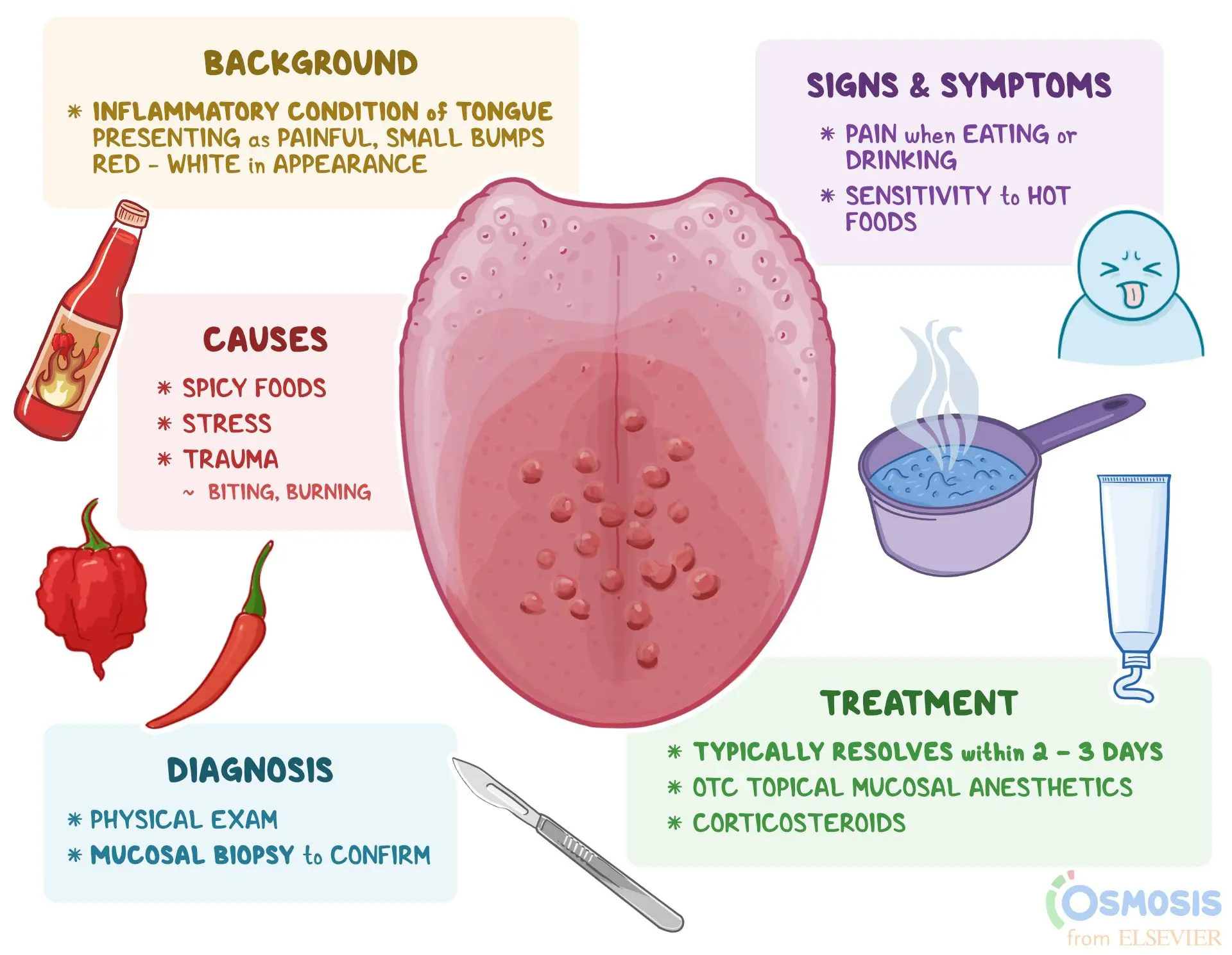
Smaller bumps farther back can also be inflamed taste buds or irritated papillae. Taste buds are sensitive to heat, spice, acidity, rough foods, burns from hot drinks, and even aggressive brushing or scraping. When irritated, they rise, redden, and may feel sore or raw, especially when exposed to salty, sharp, or spicy foods.
These sorts of bumps are temporary and common. They often heal within 2 to 7 days.
Possible triggers include extremely hot coffee or tea, spicy meals containing chili oils or hot sauce exposure, acidic reactions from citrus fruits or heavy tomato consumption, physical irritation from crunchy foods like chips or toast shards, dehydration that concentrates saliva and increases sensitivity, and stress, which can indirectly heighten inflammation responses in the oral cavity.
Treatment is simple: reduce irritation sources, hydrate well, and give the tongue time to calm down.
Canker Sores vs. Tongue Bumps
Another concern many people have is confusing general bumps with canker sores. aphthous ulcers are shallow, painful lesions that can appear anywhere in the mouth, including the tongue, though they are more commonly found on the inside of lips, cheeks, and gums. They typically present as round or oval sores with a white or yellow center and a red border, and they sting noticeably when irritated by food or drink.
Unlike general bumps, canker sores are open sores, not raised tissue nodules. The distinction matters.
Canker sores are not contagious. Their common triggers include stress, vitamin deficiencies, hormonal changes, certain foods, and accidental biting or injury. They usually heal on their own within 7 to 14 days and can be treated with oral soothing gels or saline rinses, which we will discuss in more detail later.
Viral Causes of Tongue Bumps
Some bumps on the back of your tongue are linked to viral infections. Coxsackievirus is known for causing painful oral lesions, including bumps, sores, or blisters around the tongue, throat, and inner mouth tissues. This is a contagious infection that may also involve fever, fatigue, sore throat, and bumps on the hands and feet.
There is also Herpes simplex virus, which can cause oral sores and raised lesions around the mouth. However, HSV-related lesions appear more frequently on the lips and may form clusters that eventually blister rather than remain as isolated bumps at the rear of the tongue.
Most viral causes are temporary, but discomfort levels can vary widely.
Symptoms of viral bumps tend to differ from simple irritation bumps. Viral bumps may be painful rather than just noticeable, sometimes blister or ulcerate rather than simply rise, accompany fever or systemic symptoms such as fatigue and chills, spread beyond the tongue into the throat or mouth border tissues, and may cause throat soreness when swallowing.
Antiviral medications are sometimes used depending on the type and severity, but many cases are managed with comfort care such as hydration, rest, mouth rinsing, cold foods for soothing, and pain-reducing oral gels or lozenges.
Bacterial Infections and Oral Health Imbalance
Certain bumps are tied to bacterial issues, especially when general oral hygiene is affected. Poor bacterial balance can irritate tissues and lead to swelling of papillae. Gum disease or periodontal challenges can influence tongue health due to bacterial spread through saliva. In rare cases, bumps accompany streptococcal infections, especially if the throat also feels sore.
Bad taste, fever, swollen lymph nodes, or throat pain can sometimes indicate bacterial involvement.
Signs of bacterial imbalance linked tongue bumps may include bad breath paired with soreness, gum swelling or mild bleeding while brushing, constant metallic or sour taste sensations, mild fever or sore throat, sensitivity when swallowing, white or yellowish film in some cases, and red, swollen, or sore bumps at the back or across sections of the tongue.
Bacterial causes may require improved hygiene, antimicrobial mouth rinses, dental checkups, or antibiotic support if systemic symptoms are present.
Oral Thrush and Fungal Overgrowth
oral candidiasis, commonly called oral thrush, is a fungal overgrowth caused by yeast imbalance in the mouth. It is more likely to occur when immunity is low, after antibiotic treatments, during inhaler use, or when dry mouth is frequent. Thrush may cause bumps combined with thick white or cream-colored patches on the tongue or inner mouth, sometimes accompanied by soreness, cracking at mouth corners, or a cotton-like taste.
The bumps in thrush are often secondary to coating thickened fungal film.
Thrush is treated with antifungal prescriptions, but mild cases respond well to early hygiene intervention, hydration, tongue cleaning, and probiotic or dietary balance support that helps restore yeast harmony in the mouth.
Allergy-Related Bumps on the Back of the Tongue
Allergic reactions sometimes create bumps, especially near the rear of the tongue where immune response cells interact heavily with saliva and food proteins. Oral allergy-related bumps may arise from new foods, environmental exposures, sudden detergent or toothpaste sensitivity, pollen cross-reactions that influence the mouth, nut or dairy sensitivity in certain individuals, medication allergies in rare scenarios, or reactions tied to food preservatives.
Allergy bumps may itch more than hurt, and may appear suddenly after contact.
Unlike infection-related bumps, allergy bumps may include mouth itchiness, throat tickling, bump rise without fever, sudden onset after meals, watery mouth sensation, visible bumps without white film, and reduced symptoms when antihistamines are used or exposure is avoided.
Allergy symptoms can signal mild reactions, but dramatic swelling, breathing difficulty, or throat-tightening sensations require immediate emergency medical attention.
Acid Reflux and Throat-Side Tongue Irritation Bumps
Many don’t associate acid reflux with tongue texture changes, but the connection is stronger than expected. People experiencing gastroesophageal reflux disease sometimes develop bumps, especially near the back of the tongue and throat junction due to acid exposure that rises during sleep or after meals.
Reflux irritation may appear as bumps, throat burn sensation, or rear-tongue soreness.
Common clues tying bumps to reflux include morning soreness or rough sensation at the back of the tongue, bitter or sour aftertaste upon waking, increased bumps during reflux-active weeks, throat irritation alongside tongue sensitivity, mild cough without infection, symptoms improving after taking reflux medications, irritation rising again after heavy late meals, more sensitivity after coffee, fried foods, or acidic drinks, and less dramatic redness, more like dull irritation swelling.
Treatment focuses on managing acid exposure, avoiding late meals, reducing trigger foods, improving sleep elevation, and using medications like antacid or reflux control therapy.

Nutritional Deficiency and Tongue Texture Sensitivity
When the body lacks certain nutrients, the tongue is one of the first tissues to react. Deficiencies linked to bumps or tongue texture changes may involve vitamin B group deficiencies that affect cellular tongue lining regeneration, zinc deficiency that increases inflammation sensitivity, low ferritin or iron imbalance that can make oral tissues reactive or more prone to papillae swelling, vitamin D deficiency that can indirectly influence immunity linked inflammation, or general malnutrition that reduces cellular tissue repair speeds, increasing bump sensitivity.
Deficiency bumps may not hurt immediately, but recur frequently and heal slower.
Symptoms worth considering include recurring bumps without clear infection source, cracks or soreness at mouth corners, fatigue paired tongue swelling cycles, weak immunity recurring mouth irritation, tongue sensitivity after minimal triggers, slight paleness around tongue tissues, bumps improving after nutritional supplementation, recurring bumps tied to monthly cycles or fatigue stress periods, increased sensitivity to spice or acid foods, raw sensation without viral fever clues, general sensitivity rather than clustered blistering, slow healing of rear bumps, mild burn feeling without infection cough, papillae swelling that subsides and returns, and better tongue calmness when multivitamins are taken regularly.
Treatment involves restoring proper nutrient levels using supplementation or dietary improvement.
Geographic Tongue and Inflammatory Texture Changes
Another common but non-serious cause is benign migratory glossitis, also known as geographic tongue. It creates irregular texture changes across the surface of the tongue, sometimes appearing like patches, borders, or slight bumps, though it is usually more about pattern shifts than rear-isolated bumps.
Some drivers include flare-ups that make the back of the tongue look slightly raised.
Flare triggers include stress, immune shifts, dry mouth episodes, spicy foods, acidity sensitivity, and climatic or seasonal allergy links. It is not contagious and typically improves when irritation sources are reduced.
Effective, Evidence-Aligned Treatment Options
Most harmless bumps on the back of the tongue heal independently. However, when treatment is helpful, consider the following:
Warm saline rinses. Mix half a teaspoon of salt with warm water and swish gently 2 to 3 times daily. This calms inflammation, reduces bacterial load, and soothes irritation.
Hydration. Drink water consistently. A well-hydrated tongue is less reactive and repairs itself faster.
Avoid trigger foods temporarily. Reduce acidity, spice, sharp salty snacks, or extremely hot drinks while healing.
Probiotic foods like yogurt or supplements can help restore microbial balance, especially after antibiotics or during thrush susceptibility.
Oral gels containing benzocaine or lidocaine can reduce pain temporarily when bumps are sore.
Oral antifungal medication is used if thrush is confirmed.
Reflux medications help if bumps appear linked to acid exposure. Options include H2 blockers or proton pump inhibitors.
Vitamin or mineral supplementation is advised when deficiency is confirmed. Examples include a general multivitamin or B-complex support for cellular lining repair.
Prevention Tips That Actually Work
Prevention is easier than treatment. The best habits include brushing twice daily without harsh pressure, cleaning the tongue gently without over-scraping, hydrating throughout the day, avoiding late acidic or high-fat meals if reflux prone, replacing toothbrushes every 3 months, rinsing after meals rather than brushing instantly after acid foods, managing stress, asking dentists to screen for deficiency or infections during routine cleanings, avoiding alcohol-based mouth rinse if dry-mouth prone, and balancing the diet using nutrient-rich foods including eggs, dairy, fish, leafy greens, seeds, nuts when not allergy-sensitive, berries, whole grains, and fermented foods.
Myths That Need to Disappear
Tongue bumps do not always mean cancer. Cancer-related lesions behave differently, persist longer, and often accompany unexplained bleeding, dramatic shape change, or persistent throat soreness.
Cold weather does not cause tongue bumps, but dehydration from heated indoor air can.
Most bumps are not contagious unless viral or bacterial infection is present.
When Should You Get Medical Care?
Seek professional help if bumps persist longer than 2 weeks, pain becomes severe, swallowing becomes difficult, fever accompanies oral lesions, white patches coat the tongue thickly, bleeding or gum swelling worsens, throat swelling feels dramatic, or breathing difficulty appears.
Final Thoughts
Tongue bumps near the rear are often normal anatomy, temporary inflammation, or mild oral imbalance rather than something dangerous. Most cases heal quickly with care that focuses on irritation reduction, hydration, hygiene improvement, or nutritional balance support when needed.
Understanding the core cause does more than reduce fear. It gives your body the support it deserves and helps you act early, calmly, and correctly when attention is needed.
Leave a Reply